

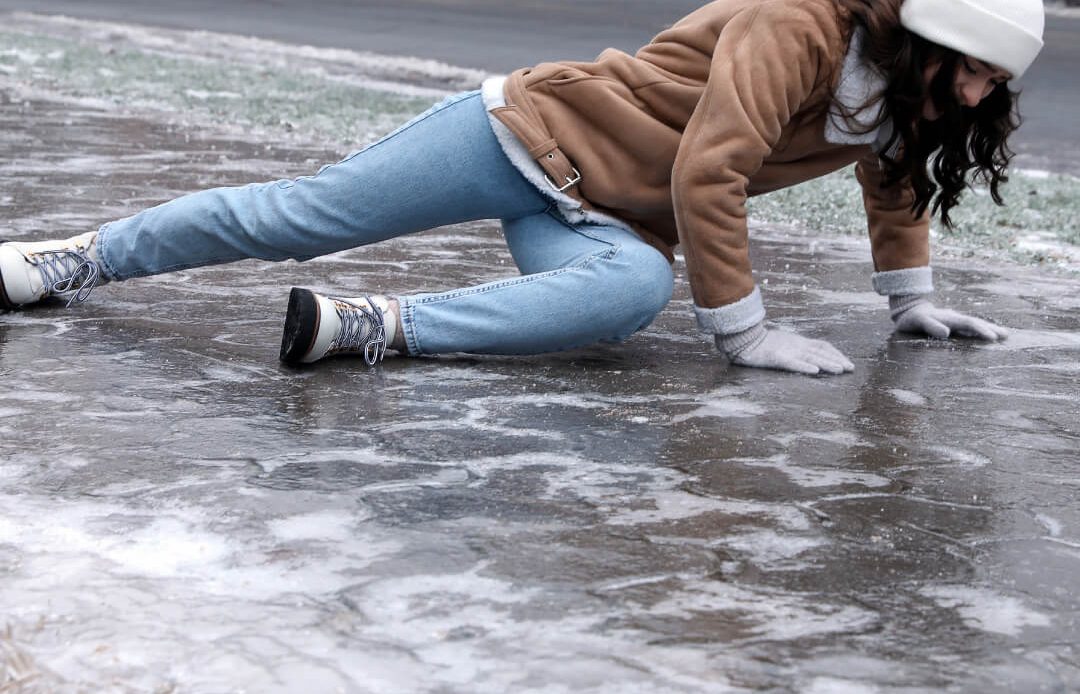
Wisconsin winters can present serious challenges. Snow, ice, and freezing temperatures can quickly transform parking lots into hazardous conditions. If you are injured after slipping on ice in a parking lot, the actions you take in the moments and days that follow can significantly impact the strength of your personal injury claim.
Gathering appropriate evidence is especially important in Wisconsin, where property owners frequently contend that icy conditions were natural or unavoidable. Below is a summary of what to do after a slip-and-fall on ice in a parking lot.
1. Photographs and Video of the Scene
If you’re able, take photos or videos as soon as possible after the fall. Ice conditions can change quickly once maintenance crews arrive.
Be sure to capture:
- The icy or snow-covered area where you fell
- Lack of salt, sand, or plowing
- Footprints or skid marks showing how slippery the surface was
- Poor lighting or obstructed views
- The surrounding area to show the location and context
- The existence of any security camera footage
Use your phone’s timestamp feature if available.
2. The Exact Location of the Fall
Write down or photograph:
- The specific spot where you fell
- Nearby landmarks (store entrances, parking spaces, signage)
- The name and address of the business or property
Parking lots often involve multiple responsible parties, such as a business owner, property manager, or snow removal contractor. Precise location matters.
3. Incident Reports
If the fall occurred at a business, notify management immediately and request that an incident report be completed.
Important tips:
- Stick to the facts—avoid guessing or admitting fault
- Ask for a copy of the report or note who completed it
- Record the names and titles of anyone you spoke with
If no report is offered, document the interaction yourself.
If the premises have cameras maintained by a business, see if they the business will give you a copy of any footage. If not, ask the business to preserve the footage and follow up with a writing to the business confirming when the request was made and that the footage should not be erased or overwritten.
4. Witness Information
Witnesses can be powerful in slip-and-fall cases, especially when ice is involved.
Try to collect:
- Names and phone numbers
- Email addresses
- Brief statements about what they saw
Even a witness who didn’t see the fall but noticed the icy conditions beforehand can help support your claim.
5. Weather and Timing Information
In Wisconsin, property owners are generally required to take reasonable steps to address icy conditions within a reasonable time.
Helpful evidence includes:
- The date and time of your fall
- When the last snowfall or freezing rain occurred
- Whether the lot had been treated earlier that day
Weather records can help show whether the property owner had enough time to salt, sand, or plow.
6. Your Footwear and Clothing
Do not throw away the shoes and clothing you were wearing at the time of the fall.
Preserve:
- Shoes (especially the soles)
- Clothing with visible moisture, ice, or salt residue
These items may later be used to counter claims that your footwear caused the fall.
7. Medical Records and Treatment Documentation
Seek medical attention as soon as possible—even if injuries seem minor at first.
Keep records of:
- Emergency room or urgent care visits
- Doctor appointments
- Diagnostic imaging
- Physical therapy
- Prescriptions
Medical documentation creates a clear link between the fall and your injuries.
8. Your Own Written Notes
As soon as you can, write down:
- How the fall happened
- What you felt physically
- What you noticed about the ice
- Any statements made by employees or managers
Details fade quickly, but contemporaneous notes can be extremely persuasive.
Wisconsin Slip and Fall Claims Can Be Challenging
Wisconsin law recognizes that winter conditions are unavoidable—but property owners still have a duty to act reasonably. Proving negligence often depends on evidence, not assumptions.
Insurance companies frequently argue:
- “Ice is a natural condition”
- “The owner didn’t have enough time to respond”
- “Your footwear caused the fall”
Strong evidence helps overcome these defenses.
Bottom Line: Evidence Matters
If you slip and fall on ice in a Wisconsin parking lot, your claim doesn’t hinge on luck. It hinges on proof. The sooner you gather and preserve evidence, the better your chances of protecting your rights and recovering fair compensation.